It's that time of year again - but, I seem to be a little behind with my seed sowing. I can't get myself into gear and get on with it. You know how it is - I have just come back from holiday and feel all relaxed - now I need to rev up and get cracking. So - after inspecting everything in the greenhouse to check on progress whilst we have been away - I sowed some more peas (Douce Provence) and broad beans (Aguadulce) and three types of dwarf bean (Rondo, Delinel and Tendergreen). Only half of the pink flowered broad beans germinated, the rest rotted in the pot, due in part I think to over-enthusiastic watering.
Broad bean - Karamyzn
Add caption
Peas - Hurst Green Shaft
The tomatoes are coming along fine, snug in their mini-greenhouse within the big greenhouse - I still have the Black Russian to sow yet, but I am leaving those for a while so I get a later crop.
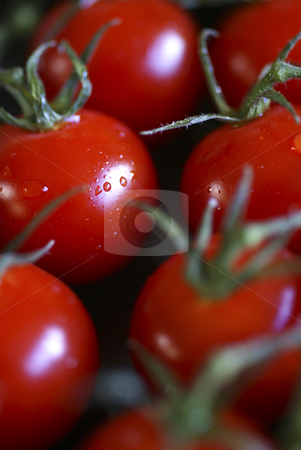
Tomatoes - mixed
And the Anya potatoes are just poking through
Anya potatoes
Anya
And except for a few herbs, that is all I have done so far
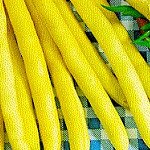
Now is the time to start thinking about sowing my first batch of Dwarf or French Beans. I like to extend the growing season by having a few plants in containers in the greenhouse. They come in all shapes and sizes each having their own special flavour. I particularly like pencil thin beans, slim pods that hang in bunches from low-growing plants. 'Delinel' is a French 'filet' bean with a distinct flavour and heavy yield.
Delinel
I won't be sowing outdoors till late April/early May, once the soil has warmed up and the chance of frosts is less. The thing about sowing in pots is that you have to make sure the seeds don't rot in the wet compost. To make sure this doesn't happen I mix in equal amounts of perlite to compost - this ensures the soil is free-draining.
Each year I add a different variety to my collection - last year it was 'The Prince' which is a heavy-cropper with good flavour - this year it is 'Delinel' - of which I have heard good reports, but beans come in a few different colours to add a bit of interest.
Purple Teepee
Mont D'Or
After the initial sowing - if I can remember - I will sow a few beans each month outdoors from April to July - to get a continuation of crops. If I sow them at 2in. intervals it means that I can thin out the weaker ones and also if the slugs decide to make a meal of them I will still have enough left for good crops. Dwarf beans only produce for a short period so it is important to make several sowings.
It helps to pick the beans regularly when they are small, as soon as the beans start showing in the pods they become tough and stringy, and it helps to keep the plants producing. All the beans require is a good, rich, soil and plenty of water.
Towards the end of the season I will plant some in pots in the greenhouse again to extend cropping into October. I can't ever remember having a bad season with French Beans, as, unlike runner beans, they are self-fertile and don't rely on pollination.
As you can see from the photograph the allotment crops have just about all gone. Half a row of perpetual spinach has survived, a couple of cabbages and the psb which didn't weather the winter very well at all.
The bottom leaves have dried out completely but there are a few flower heads
not enough for a complete meal though - I am seriously considering not bothering to grow it again - for the amount of time it is in the ground and how many meals you get from it - I don't think it is value for money.
This is the last Savoy cabbage
and this is the last January King - when they have both been eaten, that's it - nothing left. What you might call the 'hungry gap' has begun.
I did pull the last of the Parsnips and Carrots at the weekend as they were starting to regrow I will store them in dry earth till needed or maybe even cook and freeze them for later.
The last crops from 2011 - altogether I am quite pleased with the harvests from last years' sowings - because of this blog I now have good records of what did well and not so well, I will learn from the mistakes made, over-sowings, under-sowings etc. and adjust quantities accordingly. In previous years before I started this blog about veggie growing I had to rely on my memory, which isn't very good at the best of times.
Hopefully, this year I will remember to do repeat sowings at the right time and try to extend cropping where possible. I haven't had too many disappointments - most crop failures have been down vagaries in the weather. This year I must try not to be too impatient and sow too early - waiting for the soil to warm up, planting out into cold soil doesn't make things grow any quicker.
As the temperature rises there are signs of spring - the rhubarb is slowly emerging from hibernation, there are buds on the fruit bushes, and before long I will be panicking because I am running out of freezer space - and so the veg growing season begins!
There isn't much left in the veg garden now - a few cabbages maybe, purple sprouting broc looking the worse for wear and a few leeks - but I guess that's the way it should be at this time of year. Of course space is now needed for getting ready for the new gardening season and preparations are in hand.
Shallots, onion greens, garlic and leeks
I decided to plant the shallots in last years potato sacks, all I have to do now if carefully transplant them into the ground now that they have rooted, this will give them a good start, and the birds will find it more difficult to pull them out. The onion greens have been cut several times and have grown well, these will remain in this container for further use throughout the year. The garlic withstood the bad weather well without protection and the shoots are about a foot high now. If you remember in a previous post here I decided to experiment with my leeks by not digging them up, instead I decided to slice them off at ground level to see if they would re-grow. As you can see from the picture, bottom right, the experiment has worked and new leeks have formed. I have cut them off twice now and still they come back. I will have to wait and see if they go to seed this year - but nevertheless I have so far had three lots of leeks from the one crop - so that can't be bad.
salad leaves
In the greenhouse there are just a few overwintered salad leaves left now, but they are beginning to look weak and spindly and some are going to seed. I have just sown the first batch of new seeds for this year to keep the momentum going.
Potted up strawberry plants
In the greenhouse the strawberry plantlets that I potted up are showing signs of new growth, slowly, but it has been pretty cold in there - I prefer growing strawberries in pots as it keeps the slugs off and you get earlier crops, outside I grow them as ground cover under the raspberries.
purple sprouting broccoli
I only have half a dozen psb plants - two at home and the rest at the allotment. The ones at the allotment are really looking in a sorry state after the snow etc. but this one pictured at home seems to have fared better, although there is no sign of any flowering shoots yet.
The next job for the month is to get the ground prepared for the onions, potatoes and peas - which, if the weatherman is right about the weather warming up towards the end of the week - I may be able to get done, with a bit of luck and a following wind.
As well as my allotment kitchen garden and the Rosebank ornamental salad garden I also grow vegetables in containers every year, hoping to utilise as much of my space as possible. The containers vary from old metal buckets and washtubs to hanging baskets, flowerpots and crates.
smallorganicgardens.com
via
Pinterest
Container gardening opens up lots of opportunities for growing virtually anything, anywhere with very little extra work.
bhg,com
via
Pinterest
I like to keep the containers all together in one area, if possible, for ease of watering and to make more of a colourful display.
containergardening.com
via
Pinterest
llhdesignsblog.com
via
Pinterest
The containers I use vary in size depending on what I am going to plant. Small for lettuce, onions, garlic and annual herbs. Medium for peppers, aubergine, bush beans. Large for tomatoes, cucumber, squash, runner beans and peas.
tastefulgarden.com
via
Pinterest
They are all placed in the sunniest part of the garden and have to be watered daily and fed regularly. The plants do need a lot more looking after, than those planted out in open ground. As in the picture above, you can container garden at all levels and heights to make the best use of the space available.
The advantage is that when one crop has finished you can replace the potting compost and re-sow with something different which gives you a good succession of crops.
How successful have you been with your container gardening, and if you haven't tried it before, do you think you will give it a go this year?
My veggie growing season always starts with Tomatoes. Some years I can't be bothered with sowing seed and buy plug plants later in the season, this means I am restricted to only a small selection of the more popular varieties, but when I can be bothered I start them off in pots on a heated tray and put them on the sunniest windowsill I can find.
I am growing eight different types this year, some tried and tested, and one or two new varieties to see whether they will be added to my list next year. I have ditched two types this year 'Tigerella', not because there was anything wrong with it, in fact, it performed very well, and tastes pretty good - the other, a beefsteak type 'Consteluto Fiorentino' which didn't behave itself, and turned brown at the earliest opportunity.
The ones I grew last year that performed well, included Gardeners Delight and Sungold, both indoors and out.
Piccolo cherry tomato
I saved these Piccolo seeds from some supermarket tomatoes together with Pomodoro
Pomodorro small plum tomato
Both of which I found very tasty, hopefully they will come true to type - but if not, well I am sure they will produce tomatoes anyway.
Alicante
Alicante are a good old-fashioned regular size tomato that produce good crops of medium size fruit, with a fairly good taste, and can be grown in the greenhouse or outdoors, and are a reliable heavy cropper.
Marmande
Marmande are a favourite tomato of Provence, the heavy-ribbed fruits are very 'meaty' and perfect for slicing.
Gardeners Delight cherry tomato
One of the most reliable tomatoes is Gardeners Delight producing masses of large cherry sized fruit with a fantastic flavour on long trusses.
Tumbling Tom
I have tried quite a few different types of tumbling tomatoes that are suitable for hanging baskets, but to my mind Tumbling Tom, is far and away the best variety so far. It is usually the first tomato to ripen even though it is outdoors, and the more you pick the quicker they ripen. A definite winner for me.
Sungold cherry tomatoes
Finally, my absolute favourite for flavour - the Sungold tomato. I first came across these a few years ago when I was 'greenhouse sitting' for a friend, watering whilst he was away on holiday. This is the only variety he grows and I can understand why. They produce masses of fruit, and can be a bit of a thug, if not carefully controlled by nipping out any unwanted growth. But the flavour of the tomatoes makes up for an trouble they may cause with their unruliness. I was still picking tomatoes in November from my outdoor plants.
Black Russian
My last choice, which I know nothing about, is the Black Russian - a heritage variety - which is winging its way in the post to me right now. I bought this on impulse so I don't know what its taste is like, but I'm willing to give it a go - and if I don't think it is worth it I won't bother next year. All photos courtesy of Google Images
I usually grow a mix of six plants in the greenhouse and the rest are grown outside - a few in a trough in the 'Rosebank' garden, the rest at the allotment. In the book One Straw Revolution the author suggests that if you don't support your tomatoes, they will lie on the ground and root wherever the stem touches the soil, which means you will get more trusses developing. So, as ever, I intend to experiment, and do just that ,to see what happens.
I can feel a tomato glut coming on already - most years I freeze tomatoes whole, then just take the amount I am going to need out of the freezer bag - the skin comes off the frozen tomato dead easy if you hold it under a warm tap.
Of course any tomato plants planted in open ground are more susceptible to blight, so the cherry types are a better bet as they ripen faster. The mistake people make is overwatering outdoor tomatoes which leads to more leaf than fruit - once they have been planted out at the end of May, they can be left to their own devices till the first flowers arrive. In their native countries, places such as Equador, Peru and Bolivia they grow in poor ground that is dry - and from experience I can say that outdoor toms develop a better flavour than those grown indoors. Bush tomatoes would be an even better bet as they don't need staking.